Tuesday, 9 December 2014

Presentation Script

The morality of the gangster community is a theme that runs throughout Martin Scorsese's films. does this make him an auteur?

Speaker- Martin Scorsese is an American films maker and has made many well known films. Anyone who watches one of Martin Scorsese's films will recognise a similarity in his portrayal of Italian American gangsters and the morality they live by. If you know a bit about Scorsese's childhood you also know that it is bits of his personal life integrated into his films. His use of strong violence contrasted with scenes of love and classical music creates a binary opposition for his films. This can easily describe Scorsese as an auteur. For a director to be considered as an auteur they must imclude "distinguishable personality of the director" in the films and "someone who brings something genuinely personal to his subject instead of producing a tasteful, accurate but lifeless rendering of the original material" (Item 7)

Projector- Trailer of Goodfellas 1990- 2m 59sec

Speaker- In this trailer of Goodfellas you can clearly see the themes of the narrative which are crime and violence. From this we see some of the morals that the gangsters live by with one of Scorsese's common technique of a voice over, in this case from character 'Henry Hill', "Everybody knows if you step out of line, you get wacked". From this we see one of the morals that these gangsters live by and also their own colloquial language. Scorsese wanted to depict the violence as "cold, unfeeling and horrible" (Item 5) but to ensure an R certificate rating he had to remove 10 frames of blood. Watching Scorsese narratives today such as Goodfellas and Casino you can appreciate the way in which both reflect and question the prevailing morals of the Mafia.

In Goodfellas the gangsters get progressively smaller and less troubled by the morals that they have always lived by. Goodfellas is about the 'smalltimers'. Where as Scorsese's 1995 narrative Casino consists of his most favourite themes of violence, greed and hubris. Casino goes above the street corners of New York and into the inner workings of America's gang corruption. Casino is considered a weighty film, an "anthropological exploration of how the mob lost their westernmost outpost" (Item 16) which in comparason to Goodfellas gives the narrative more scope and depth. Scorsese's depiction of Italian American gangsters all comes from his own experiences as a child. Scorsese grew up in little Italy, a neighborhood that was run by gangsters, he saw first hand what they were really like and that is how he portrays them in his films. Scorsese's "Tradition of quality" (Item 7) makes him an auteur.

Projector- Scene from The Departed (how far in it is&how long the clip is)

Speaker-  (Give detail on specific scene) As you can see from this scene The Departed differs from Scorsese's other classic American gangster films. It is still a film about the Mafia, the difference is that the narrative is filmed from the perspective of charcater Billy Costigan (Leonardo DiCaprio) leading the viewer to gain the preferred reading and side with Costigan, who is a member of the Boston Police force.



Friday, 26 September 2014

La Haine Essay- Film Techniquies

How far does the impact of the films you have studied for this topic depend on distinctive uses of film techniques?

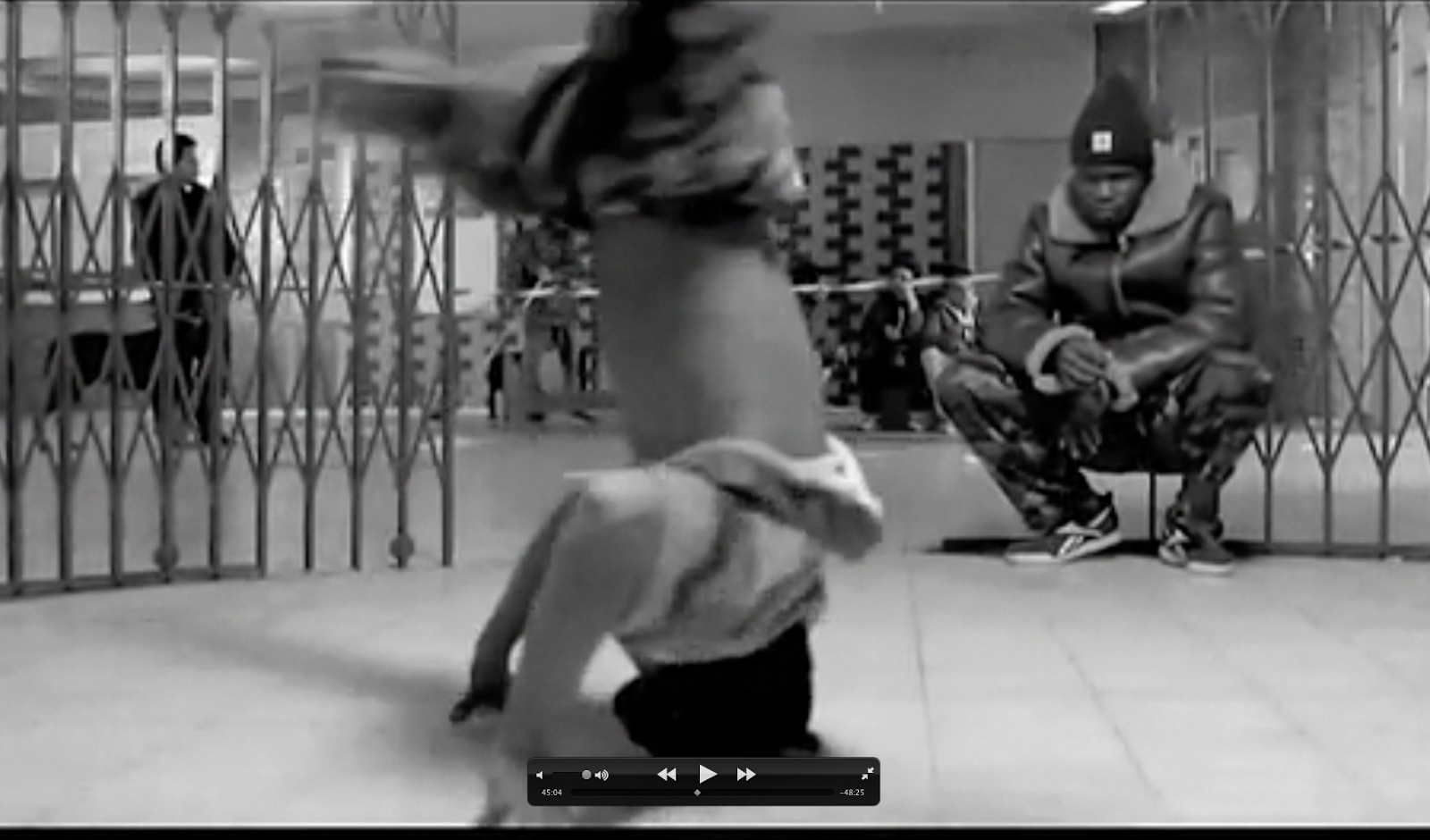
One of the films i have studied on this topic is the 1995 French film La Haine directed by Mathieu Kassoviz. This film shows the story of three youths that live in La Banlieues or the projects on the outskirts of Paris. With the name the projects it sounds like that area is an experiment. The area that La Haine is set is a lower class area with around twenty miles out of Paris, it seems that i is almost designed to keep the poor out of the middle class centre of the city. Throughout the film the camera shots used are of 180 or 360 degrees. This is to show that no matter what happens or how the French revolt things will never change. In 1994 there was riots in France on which this film is based, ten years later in 2004 the same thing happened again and riots broke out in Paris. The 360 degree camera shots also present Paris itself as the Director Mathieu Kassovits says that "Paris is laid out like a snail" as it goes round in circles. This is not just shown in the camera movements but also in the movement of the people in the film. Such as the breakdancing shown in the picture below. The young man is spinning round on his head, he spins so much that it takes him a few moments to realise that the police have raided the building and everyone has ran away. Showing how oblivious to the problems of Paris people can be.

This film does have very distinctive uses of mise en scene, for example the clothing that Vinz, Hubert and Said wear. Through their clothing we can tell that they are very westerised. The nike and addidas sports wear clothing are big American brands. Throughout the film the westernisation is shown in the music that is played, it is usually american hip hop or rap music. Also when we are introduced to Vinz there is a 360 degree camera pan around his room. With everything we see in Vinz's room the audienec discovers everything about him. There is a poster with a picture weed on it, a picture of Bruce Lee and Maralyn Monroe on his wall. And a collection of low top trainers. Everything we see in his room tells us that he is very westernised, he had American film starts om his wall and American brand trainers. This is also shown when we get a 180 degree camera pan on Huberts room. They all share the enjoyment of drugs, Hubert especially as he is also a drug dealer. When in his room we get a close up shot of the Hash he is cutting up ready to sell.

Another film technique that is common throughout La Haine is the way the three main characters are seen in frame. Said is always seen to be in the middle of Hubert and Vinz, almost as if he is stopping them from having conflict. This is because Said is the only character that has some form of older male influence in his life which is his older brother. Vinz and Hubert have no male influence, this is wear Said steps in as he is constantly bringing them together.

Thursday, 25 September 2014

Catalogue- Martin Scorsese

The morality of the gangster community is a theme that runs throughout Martin Scorsese's films, does this make him a auteur?

Films                             
Item 1- Goodfellas (1990)
I chose Goodfellas as one of my focus films as it is one of Martin Scorsese's first and most well known gangster films. Goodfellas is a film based on the true story of Henry Hill. As a young man all that he wants is to become a gangster. Henry Hill is adopted by a group of Italian American gangsters in New York and is taught the ways of a gangster. He is taught the high moral code of the gangsters, what to do when you get 'pinched', and the violent way to 'sort' people out when they are out of line or a threat. We see the rise of Henry Hill when he works his way up through the mob hierarchy, and his fall when greed gets the best of him. Martin Scorsese is the Director and the screenplay writer of this film which is based on the book 'Wiseguy' written by Nicholas Pileggi. Martin Scorsese is easily considered an auteur after Goodfellas. This is why I have chosen Goodfellas for my research investigation.


Item 2- The Departed (2006)
The Departed is another useful and more recent source from Scorsese which also has the reoccurring theme of gangsters. This films tells the story of an undercover cop, Billy Costigan, who is assigned to infiltrate his way into a Irish mob run by Chief Costello. While Billy is beginning to gain the trust of Costello, Colin Sullivan a member of the mob has infiltrated the police department and is working to find out information that he can feed back to the syndicate. Both Costigan and Sullivan become consumed with their double lives of gathering information about the plans of each operation. It soon becomes clear to the gangsters and police that there are 'rats' in their operations. Both in extreme danger of being caught the pair race to discover the identity of the other man and expose them to save himself. Once again Scorsese has made a gangster film full of corruption, violence and mistrust which makes this perfect for my research as a story of gangster morals which will assist me in answering my question of gangsters morality.

Item 3- Casino (1995)
This film again focuses on the power and corruption and greed which occurs between two mobster friends and trophy wife. There is also reoccurring actors such as Robert De Niro and Joe Pesci who are also in Goodfellas and several other Scorsese films. Casino is a film about the exposure of the inner workings of a corrupt casino. Similarly to The Departed and Goodfellas, Casino contains one of Scorsese's most common themes, gangster morality. Casino is another one of Scorsese's films which is all about corruption, mistrust and violence which will assist me in anserwing my question of maorality in the gangster community.

Books

Item 4- 'A Cinema Of Loneliness' Robert Kolker
I chose this book as is goes into detail about the three focus films that i have chosen to use on Martin Scorsese. It compares Scorsese's films, and the specific conventions, techniques and themes that are unique to Scorsese. This will be very useful for my investigation as the discussion of the reoccurring gangster themes of Martin Scorsese's films as it inks in directly to my question. I will be able to use this to include quotes and information in my investigation.    

Item 5- 'Scorsese on Scorsese" Martin Scorsese
I have chosen to use this book for my research investigation as it includes discussions of the three focus films I am using. This book is all from Martin Scorsese's perspective of his films, why and how he came about to make them. This will be useful for quotes as Scorsese also compares the themes of crime and violence and states how they are reoccurring themes in his films. Scorsese also talks of certain technical conventions he used in Goodfellas and Casino and explains why he chose to use them.

Item 6- 'The Directors' Robert J. Emery

This book is useful for my research investigation as it includes Martin Scorsese's reaction to making Raging Bull and one of my focus films Casino. It also includes quotes from Scorsese on how it was for him making Casino and what It was like working with the actors such as Robert De Niro and Joe Pesci. This will help with my investigation as the book points out the running theme of violence and gangster crimes that are common in Scorsese's films.

Item 7- "A Companion To Francois Truffaut" Dudley Andrew
This book is useful for my research investigation as even though it is a book about film director Francois Truffaut is includes information about his "Certain Tendency". This is Truffaut's ideas on the theory of auteurship and what it really means to be an auteur. His theory of what makes a director a true auteur links in well with the work of Martin Scorsese as he includes his personal life and his own experiences into his films. This is what Truffaut believes makes a good auteur and a better film as it makes the film more real.

Miscellaneous


Item 8- 'Official Trailer for Martin Scorsese's Goodfellas' https://www.youtube.com/watch?v=qo5jJpHtI1Y
I have chosen to use the trailer from one of my focus films, Goodfellas as It gives an introduction to the characters and the actors and shows some of the violence that is in the narrative. By including some of the voice over of 'Henry Hill' it introduces some of the colloquial language used by the gangsters and shows some of the morals that the gangsters live by. This is good for my research investigation as it gives a quick overview of the film showing the key technical conventions that are typical to Scorsese's narratives.

Documentaries


Item 8-  'The Real Goodfella' https://www.youtube.com/watch?v=5RoFmHR8S3Y

This is a good source for my investigation as this documentary is about the true story on which Goodfellas is based upon. It goes through the life of Henry Hill and compares the events of his life to Martin Scorsese's adaptation of it. This will be a good source for my research investigation as there is many quotes i will be able to take from it. Also it shows just how well Scorsese is as a director since he depicts the true story of Henry Hill in the most accurate way, showing that he is an auteur.

Item 9- 'Scorsese on Scorsese'
I have chosen to use this documentary for my research investigation as it is Martin Scorsese explaining how he came about to make the films that he did. Scorsese talks small scenes from my focus films and explains exactly what his meanings were behind those smalls scenes and entire films. He speaks about how his life growing up in little Italy exposed him to the world of gangsters and how that it has greatly influenced his films. Also showing him as an auteur.

Item 10- 'Emotions through the music'

This Documentary is Martin Scorsese talking about his own personal experiences when he was growing up and how if he stood in the street he would hear a fight at one end and some beautiful music from the other. Martin Scorsese's personal experiences when he was growing up are spoken about through this documentary. This will be good for my investigation as it shows how Scorsese is an auteur.

Item 11- 'Casino 1995 The Real Story Of Casino Part 1' https://www.youtube.com/watch?v=okTzRr7YzLg 
In this documentary Martin Scorsese and Nicholas Peleggi talk about how the narrative Casino came to be. There is a discussion of how Pileggi got the idea for Casino and how once Robert Di Niro was confirmed for the film that the real people whom the text is based on became more involved as they wanted to meet Di Niro.

Item 12- 'Casino 19995 The Real Story Of Casino Part 2' https://www.youtube.com/watch?v=00dUS1Ndw1M
Continuing from 'Part 1' in this documentary Scorsese talk about his common technique of a voiceover. Pileggi talk about the struggle of making the voiceovers sound real and have the actors talk the way men from the Chicago gangs talk. 

Internet

Item 13- 'The Auteurship of Martin Scorsese' http://filmcliche.wordpress.com/2011/03/24/the-auteurship-of-martin-scorsese/ 
This is an extremely useful source for my research investigation as it is about the auteurship of Scorsese. It talks about two of my focus films and goes into detail about the films and how they are typical to Scorsese's style. It also discusses how his life leading up to his film making is shown in his films and how this makes him an auteur.

Item 14- 'Martin Scorsese interview' http://uk.askmen.com/celebs/interview_400/437_martin-scorsese-interview.html

This source is useful for my investigation as it is an article interview with Scorsese asking him questions about his reoccurring themes in his films. The article talks of Scorsese's themes of crime and gangsters and how he shows this in his films. It also discusses the time periods in which his gangster films (such as Goodfellas and Casino) are set and how the themes in them are still relevant today.

Item 15- 'A History of Violence' 
http://www.theguardian.com/film/2006/oct/06/awardsandprizes.martinscorsese
I haven chosen to use this internet article in my research investigation as it covers Scorsese's theme of violence in The Departed. This article does mainly focus on The Departed but does also compare to some of Scorsese's other films. This is a useful source as it discusses the theme of violence and crime in his films. Also how his films can be considered works of art and his close relationship to reoccurring actors in his films such as Leonardo DiCaprio and Robert De Niro.

Item 16- 'Canon Fodder: Martin Scorsese's Casino' http://www.gq.com/entertainment/movies-and-tv/201111/canon-fodder-martin-scorsese-casino-goodfellas-review
This internet article is very helpful for my research investigation as it goes into great detail about Scorsese's text Casino. It contains quiotes from Scorsese about his opinion on the film and the making of it. It also compares Casino to Goodfellas, another one of my focus films. 

Magazines


Item 17- Empire November 2008 'The Scorsese Scrapbook'

I have chosen to use this magazine for my research investigation as it discusses all three of my focus films. Although what is does discuss about the three films is brief, it contains some good information and talks not only about what the story line of the films are but also gives its reviews on the films. 

Item 18- Sight and Sound November 2006 'Scorsese Faith under Pressure'

This is a very useful source for my investigation as this article focuses mainly on The Departed. It explains in detail what happens in the film and includes interviews with Scorsese. It also discusses the films relation to modern day issues, and covers the themes of violence in the film which Scorsese had to battle with Warner Brothers about.

Item 19- Sight and Sound September 2000 'The making of Goodfellas'

The reason i chose to use this source for my research investigation as it is a very detailed article on the making of Goodfellas. It compares the film to the real life events of Henry Hill and gives the reviews of other magazines and newspapers about the film. It includes a list of actors from the films and quotes from them about their experience working on the set and their opinion of the movie. It even gives the recipes of the Goodfellas meals while they were in prison. 

Rejected Items               


Raging Bull (1980)

Although Raging Bull is one of Martin Scorsese most famous films I chose to reject it as it did not fit with the question I have chosen. Raging Bull does have some of Scorsese's reoccurring themes such as violence, and his style is shown clearly throughout. It is also another film that has led people into seeing him as an auteur. But it does not include the themes of crime, deciet and gangsters.

'The philosophy of Martin Scorsese' http://markconard.com/martinscorsese.htm

I chose to reject this online source as it does not have any use to me in my research investigation. It includes some good facts about Scorsese, but the article is very basic and has no mention of Scorsese's reoccurring themes or the three focus films I have chosen.


The Wolf of Wall Street (2013)
The reason I did not choose to use this film as one of my focus films is because it does not fit in with my question. This film certainly includes Scorsese's reocurring themes of deciet and crime but none of the characeters appear to hold any form of moral code that is similar to that of gangsters. 


Empire Magazine May 1998 ' Doctor Martin'

I decided not to include this in my research investigation as it did not have any useful information I could use. It mainly discusses Scorsese's earlier films such as 'The Big Shave' and 'Boxcar Bertha'. It spoke mainly of what happened on the sets of these films and how Scorsese came about to direct them. It has nothing of use towards my question of my three chosen focus films.

"Auteur Theory And Authorship" http://www.filmreference.com/encyclopedia/Academy-Awards-Crime-Films/Auteur-Theory-and-Authorship.html
This internet article of the theory of auteurship does include some good information; problem is it is too basic. It discusses the meaning or auteurship and where it comes from but not much else. I rejected this item as it does not contain enough useful information that I could use for my research investigation.

Wednesday, 10 September 2014

La Haine


  • La Haine translates to Hate
  • Director- Mathieu Kassovitz
  • Release date- 1995
  • Protagonists live in Les Banlieues on the outskirst of Paris.
  • Real footage of riots that regularly took place between youths and the police between the years 1986-1996
  • La Haine is based on a riot that took place in 1993 after a youth was shot in police custody.

Friday, 13 June 2014

Disney Ideologies

Disney Ideologies

Snow White and the Seven Dwarfs ties physical beauty with purity of character, as if the former is ineluctably linked to the latter. If "fairest of them all" referred to inner beauty, we'd have no story at all, now would we?


Beauty & the Beast puts a compassionate mask on the face on cold legal retribution; everyone loves the authoritarian figure for letting his/its hostage go. The injustice of keeping Beauty (as 'payback' for her father's illegal intrusion) is, interestingly enough, protested mainly by the 'bad guy' in the story i.e. the hunter obsessed with killing the beast. The suggestion that a captive could actually fall in love with and even defend the captor sounds almost obscene.


Belle doesn't care what other people think of her and her father. She does what she likes, and does not do what she does to impress other people. In a time when people frowned on women reading, she did it because she enjoyed it and it didn't melt her brain into a puddle of mush.
Another lesson it conveys is loving your family. Belle decided instead of having her father trapped in the Beast's castle, she would take his place. This tries to get kids to understand the importance of family.
Not judging a person by their appearance is another. Gaston liked Belle, but he was an ignorant self-centered, and narcissistic, and Belle saw that and rejected him. The Beast looked horrid, but once Belle got to know him, they fell in love.
The Last lesson I caught was first impressions are not always correct. The Beast imprisoned her father when she just met him. If she had just judged him, they would have never fallen in love. It teaches to love and look deeper than skin.


Cinderella is a reversed tale of two classes: the rich and those they've exploited to remain that way. Cinderella is made to serve her sisters and step-mother, for whom life is made comfortable via the forced servitude of Miss C. Justice comes in the form of a fairy godmother who transforms 'garden-variety' realia (e.g. mice, a dog, a pumpkin, etc.) into high-class status symbols (e.g. carriage, driver, etc.). This is nothing if not a cruel joke. Reality is the domain where hundreds and thousands of Cinderella-communities are put into hellish labour or forced to give up their land so their Capitalist exploiters can continue enhancing their way of life. There is no fairy-godmother (except the lobbyist or negotiator or diploma who lied to them about what a great deal they're getting), all the really important status symbols will be accrued to the ones with the big investment funds and there will be no ball these people can go to (if only until midnight).


The central message in Mulan is a good one for children. Women can do what men can do and perhaps even better. But the Mulan character tends to do it the messy way. She gets the job done, but not without destroying everything in the area. So the message is muddled. She also goes from weakling to superior soldier in the space of one abrupt and annoying song. That one is also not a terribly clear message to children. What is it supposed to tell them, that success comes overnight if you just WANT it?


Sunday, 9 February 2014

Reflective Analysis

Reflective Analysis
 
My role in the creation of this short film was the filming process. My intention was to capture a short section of film around 4-5 minutes long using approximately 25 different shots. My film is a hybrid of genres as it can be categorised as horror as well as the thriller genre as the film contains conventions of both. I hoped to create a film that would cause the audience to feel fear and panic, to do this I chose a realistic everyday setting and characters. I mainly concentrated on the themes and conventions of a psychological thriller which is a sub-genre for a thriller. One of the main problems I came across with the filming of the film was the lighting. Typical conventions of the horror genre is low key lighting. I was unable to film this during the night time meaning that the lighting was too high key. This did add to the aspect of it being a realistic setting. I was able to overcome this problem with the use of editing. I was able to lower the intensity of the lighting to make it appear more gloomy and low key. This was to help it to fit in more with the conventions of the horror genre.
The plot of my film 'Run' is that the victim, 'the girl in the woods' is running in a panic away from her mysterious killer. In the short sequence there is no clear shot of the killer, to make it appear more personal to the killer, I used handheld Point of View (POV) shots. To show the human consciousness from the teenage girl antagonist I used an Arc shot. The use of point of view shots gives the element of a psychological thriller to the film. To show that the victim has been killed there is a cross in the woods with 'the girl in the woods R.I.P' written across it. By not showing the killer or the death of the victim it gave the aspect of thriller to the sequence.
The initial idea I had for my short film is completely different to what I created. I was originally going to create a short sequence of a war tragedy, but I changed this idea as I thought it would be better to create a horror as I knew of a better setting I could use for the horror genre. Once it was decided to create the horror genre I were able to plan out the different camera angles and shots, the mise-en-scene and which sounds we could edit into each shot.
The miss-en-scene of the outfits for the victim was a black dress with a grey cardigan. This was to portray her as an everyday, ordinary, innocent girl. Whereas the miss-en-scene for the killer wore a black oversized parka coat to cover his face to make him appear more mysterious to the audience.
My film contained mainly Non-Diegetic sound which I included to show the fear of the victim and build up the suspense. to scare the audience. However there was some diegetic sound captured in the filming which created more of a realistic sound such as feet running on leaves. The non-diegetic music which was used was one of the soundtracks from a similar psychological thriller, 'The Killing'.  Low pitch thump sounds were edited in to the cross scene to create a false scare for the audience. The non-diegetic sound from the Arc shot of the victim was taken from 'Twilight, New Moon' as the music fitted well with the mood we wanted to set.

What I could have improved on with the filming would be to have been more stable with some of the shots. For two or three of the shots I was unable to hold the camera steady enough due to the angles at which I was filming. As I was filming these shots at high and low angles I was unable to use the tripod causing these shots to look unstable. As the film Is called 'Run', I used low angle mid shot of the victims feet when running. A low angle mid shot was also used to show the victim tripping over. This was to show how much the victim was panicking and to build up the suspense. To show the victim in in position of weakness I used a high angle tracking shot. To find out if the intended audience would be able to understand the story line and what message I was trying to get across, I had some other classmates watch my film as I was putting it together during the editing. They were able to tell me that the thriller genre was presented clearly and the storyline of the short sequence was well structured.

Wednesday, 8 January 2014

This is England- Independent British Film

Budget- £1.500.000
Profit- £207,676 opening weekend (UK). Total of $8,176,544
Genre- Drama
Stars- 
Certificate- 18
Release date- April 27th 2007
Production Company- 
Review- Rotten tomatoes 93%, audience 90%

Tuesday, 10 December 2013

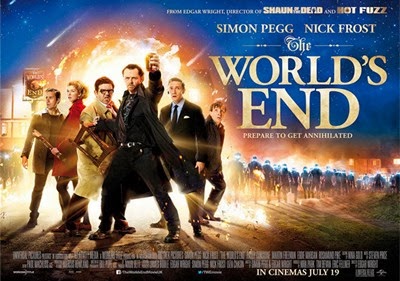
British film case study- The Worlds End

The Worlds End

Budget- $20 million
Stars- Nick Frost, Simon Pegg, Martin Freeman. Audienece appeal of Nick&Simon the film was the third part in the 'cornet to trilogy'.
Genre- Comedy/Sci Fi. Typically British as it is based on the idea of a group of men going on a pub crawl (known as a British thing). Has the appeal of comedy mixed with Sci Fi.
Box Offfice- Worldwide profit of $46'089'287. Opening weekend profit of $8,811,790. Marketing cost of around $10 million
Production company- Working title films
Cerificate- Any fans on the previous films in the trilogy Shaun of the Dead and Hot Fuzz. Plus ay fans of the other actors in the film such as Martin Freeman. Simon Pegg was also just previously shown in 'Star Trek into Darkness' Which was a box office success. 
Marketing- Trailers shown on TV in breaks and at cinemas show the appeal of the comedy in the film and also the Sci Fi aspect. Also shows the running jokes from the previous films in this 'Cornetto trilogy'. Posters and merchandise shown throughout shops, on billboards and in cinemas.  The marketing cost would be around half of what the full budget cost was on top. Around $10 million on marketing alone.
Release date- July 19th 2013. Most people off from school on break, this would bring in a wider range of audience as families, children and teens would be able to go to the cinema to see these films.
Reviews-  On the reviewing website Rotten Tomatoes they reviewed the film at 89% and showed the audience rating at 76%

Thursday, 28 November 2013

Philomena

Philomena -> Multiplex Cinema's.


  • Elements of Comedy and seriousness would attract a wider range of an audience
  • Big Actor/actress names such as Judy Dench and Steve Coogan
  • Award winner, advertises that fact.
  • Fair amount of showing times, not as many as blockbusters.
  • Based on a true story and book, would attract people that have read the book.
  • Would be screened in main screen cinemas
  • Made profits of near $15 million. Not as much as a typical blockbuster

Tuesday, 26 November 2013

Aims and Context- Charlene, Sarah & Alex

Aims and Context


  • The genre of the film I will be making with my group will be a war tragedy. 
  • The basic outline of the film will be that it starts with a woman crying at a gave, then we shall add in some flashbacks of the woman's life with the man who had died in the war right up until she gets the letter about his death. It will end with with her at his grave, same as the beginning scene.
  • Most of the middle section of the film will be flashback to an an emotional subject such as he life with her boyfriend until she gets the letter from an army officer about his death.
  • This film will be a short film.
  • In comparison to other films it will be similar to 'Dear John' and 'Forest Gump'.


Saturday, 16 November 2013

FM1 Film Analysis Coursework - Stephen Kings It, Marsh house scene.

How does the use of cinematography and mise-en-scene create suspense in the Marsh house (01:43:55 to 01:48:04) sequence from Stephen Kings It?
By this point in the film Beverly has returned home to Derry, to the house that she grew up in with her father. This is also the same house that Beverly had her first encounter with Pennywise the dancing clown. The scene starts off with a long shot to panning of the surrounding area. This is to show the viewer where the setting is and how quiet street
which is non typical convention of the horror genre. This is a contrast to the earlier scenes in the film that are shown at Beverly's home as previous, the streets would be busy with young children playing. At the beginning of this scene I felt like it was just going to be completely normal scene without anything making me feel scared, I was wrong. When the camera pans to a low angle shot of Beverly we see the mise-en-scene of what she is wearing. She is in a pink top with a floral blazer and a purple skirt, this portrays her as quite innocent. When we consider the fear she went through as a child with Pennywise the clown, she now appears as a normal grown up woman.

As Beverly stands at the front door of the house we then see a close up shot of the side of her face which is as eye level. It has a shallow focus of the door bells at this point. It then cuts to a close up shot of the door bells, the camera slowly moves down until we clearly see the name 'Marsh' written on the doorbell. We then see a close up shot of the old woman when she comes to the window. When she stands at the window we can see a symbolic aspect of mise-en-scene which is a representation issue of religion as there are upside down crosses either side of her face. As the two characters look at each other it is shown through an eye line match shot. This is to show that the two women looking at each other without physically seeing them look at each other. When the old woman comes to the door it is shown through a medium long shot. This shows the mise-en-scene of the woman's clothing which is all black. This could be to show that she is dangerous as the colour black is most commonly known as a way to issue a warning. It makes her appear threatening and that she is not to be trusted. As the two characters are talking at the doorway it cuts twice from an over the shoulder shot of Beverly to and over the shoulder shot of Mrs Kersh. It is confirmed that Mrs Kersh could be threatening as when we get another close up shot of the name tags on the door bells it now clearly says 'Kersh'. As soon as I saw that I realised that there really was something suspicious about this woman and that something bad was about to happen. This built up the suspense for me as I now thought that Beverly was about to walk into a trap.

When Beverly steps into the house it is shown through a medium long shot. As the two characters walk towards the living room of the house the camera pans to follow them. Once inside the house Beverly goes into the bathroom to freshen up. It cuts to the bathroom and we get a high angle shot of her standing over the sink. It slowly zooms in towards the drain in the sink. When I was watching this part it built up the suspense for me as I was now expecting something to happen, as Pennywise is commonly known throughout the film to come from the drains. This reminds of the film Psycho as when the woman is getting stabbed in the bath tub you get to see the blood going down the drain. I think this is very similar to this film as in an earlier scene Pennywise speaks to Beverly through the drain in the sink. He inflates a balloon out of the drain until blood splatters all over the bathroom as well as Beverly. Beverly quickly puts a plug into the drain to fill the sink up with some water, it is only a small amount of water in the sink in this shot. We get a clear high angle over the shoulder shot of this. It then cuts to a close up of Beverly's face. She closes her eyes and try's to calm her self down. Just as she is calming down we hear Pennywise shout to her but as she opens her eyes it is just Mrs Kersh. When I heard that voice of Pennywise shout it felt like it made my heart jump for a moment. It then cuts back to a close up shot of the sink, it is now full of water. This was the point I started to feel slightly uneasy, preparing to cover my face with a cushion. I just knew then that the old woman would be Pennywise.

It then cuts to an extreme close up of the two tea cups on the table. This is to show that there is just tea in the cups. It zooms out to a medium long shot of Beverly and Mrs Kersh sitting in two pink chairs opposite each other. The mise-en-scene of Mrs Kersh's house appears stereotypical of what you would expect an old woman's house to look like in that time period. Just by the mantle piece there is an ornament there that looks like a porcelain clown. This could be a foreshowing of the fact that the old woman is really just Pennywise in disguise. It cuts to a close up shot of  Mrs Kersh as she is drinking from the tea cup. The sound of her drinking from the cup makes me feel physically sick. When watching this scene I have to put that part of silent! Once she had stopped drinking from the cup you can see that her chin is wet and dripping and her rotten black teeth. That sound and the way she looks afterwards is completely disgusting. For me this builds the suspense even more as I know that the reveal that Mrs Kersh is actually Pennywise was soon to come.

It then cuts and the camera zooms into a close up shot of Beverly's face as she looks down into the tea cup. Then shows a close up of the red blood like liquid that is now in the cup. The use of blood at this point reinforces the threat that at any moment a safe and secure miss-en-scene could become disrupted by a convention of the horror genre. This seems to be Pennywise's way of letting Beverly know that it is actually him. As Beverly realises that there is now blood in the tea cup she throws it down onto the floor and it smashes. Mrs Kersh kneels down to pick up the broken pieces of the tea cup the camera slowly zooms in towards the back of her head. The voice of Mrs Kersh changes to that of an old man. It cuts to a close up of Beverly's face, the camera zooms in towards her. When the camera zooms in it gives the feeling of entrapment and really shows the fear that Beverly is feeling at this point. When Mrs Kersh looks up to no longer be Mrs Kersh but Beverly's dead father, this again reminded me of the film Psycho. When I saw his face I thought there was a similarity between him and Norman Bates in the film Psycho.
As Beverly goes to run out of the house it is shown through a Medium long shot. The camera then pans to follow Beverly as she runs to the door and to show that her dead father (Pennywise) is chasing after her. In re-watching this film at this point I did not feel as scared as I thought I would. Where as when I watched this as a child I distinctly remember being terrified of this Mrs Kersh who had now become Beverly's dead father. I used to get really scared at the thought that my father would come back to me when he died looking like that.

The camera then zooms in as her 'dead father' grabs her shoulder to try to stop her from leaving the house. When she runs into the street the mise-en-scene of it looks just as quiet and peaceful as it did before she went into the house. The camera pans to follow her running into the middle of the road and looking back at the house. In a Medium long shot we see Pennywise is standing at the door of the house laughing at Beverly. It shows a close up shot of Beverly to show her anger as she looks at Pennywise. This is an eye line match to show that the two characters are looking at one another. Once Pennywise has gone back into the house we hear a horn beeping. It cuts to a long shot of a van driving towards Beverly. Beverly jumps out of the way, the camera pans to follow the van to show that it sways and does not hit her.

It cuts to a close up of Beverly as she looks back the house, we hear the laughing of Pennywise. it shows a long shot of the house which is now boarded up with wood. Beverly is now shaking with fear, as she looks down it cuts to a medium shot of her from the waist down to show a yellow balloon come from beneath her. The balloon begins to bounce down the road. To show this the camera zooms out slightly and moves upwards to a high angle shot. Beverly becomes out of focus as the camera moves upwards until she is no longer in the shot. The scene then ends with a black fade out.


Friday, 18 October 2013

The Shining 'Come play with us Danny' Analysis

The Shining is a representation of the typical horror convention of an isolated setting. The three members in the family are stuck in this hotel, alone for an extended period of time
This scene commonly known as 'come play with us Danny', begins with Danny riding a tricycle through a long corridor. In this first corridor the camera seems to be tracking Danny but at a distance. This is to show the surrounding area, the emptiness of the corridor and the length of it.
The mise-en-scene use of the corridor could be a way of striking fear into the viewer. This may possibly be due to the commonly shared nightmare of long corridors. Showing this could actually invoke hidden or new fears for the viewer. At this point in the scene the non-diegetic sound of high pitched music is slowly building up. This makes me begin to feel anxious as it gives the sense that something frightening is to happen soon. The mise-en-scene of Danny's clothes in this scene and in others reminds me of the film Chuckie. The clothes the two characters wear and the tricycle used are both extremely similar. Due to this I feel the fear I had from watching Chuckie.
The camera follows Danny shot through the different corridors from and over the shoulder shot. The camera follows Danny closely causing me to feel entrapped and like I am there with Danny going round the corridors. Just as Danny does ride round the corner to witness the two girls there is a sudden non diegetic slam of a low pitched sound. At that point I did have a little jump of fear. The scene is lit with artificial light but is surprisingly high key. As the typical lighting for the horror genre is low key lighting. When Danny stops and sees the two girls the non-diegetic music stays at a constant eerie low pitched sound. We then get a point of view shot of the two girls when it shows them as they were killed in the hotel with an axe on the floor next to them. This can possibly be seen as a foreshadowing of the weapon Jack later uses to try and kill his family. This is shown through a long shot so we are able to fully see the girls and the surrounding area. The quick flashes we see of the two girls lying dead made me feel quite scared. My heart rate quickened. Throughout the film and in this scene there is a constant use of the colour red. This represents the danger and blood shed of the film. This is also another typical convention of the Horror genre. To intensify the fear we get a reaction shot from Danny to show just how terrified he is at this. He covers his eyes with his hands. When he removes his hands from his face, he sees that the two girls have gone. For the rest of this scene the camera stays at a tight shot of Danny. I found this scene to be rather scary, the high and low pitched non-diegetic music intensified the feeling of fear for me. But this was not the the most scary scene I saw in this film.


Thursday, 17 October 2013

Hanna


In the first scene of this action film it fades in then pans to establish the setting. This also shows the vast emptiness of the surrounding area. It uses edit cuts to show other places within the setting to give the viewer an idea of where this setting actually is. It then cuts to a panning movement across a woodland area. In this we get to see Hanna standing between two trees hunting the animal. We see that Hanna is in focus but the tree closest to the camera is out of focus to give us a sense of distance. This also shows that Hanna is the main focal point in this scene.
We then hear the enhanced diegetic sound of the arrow being shot at the animal. When the animal begins to run I can feel it's fear as it runs for it's life. Especially when we see the pint of view shot from the animal as it is running. Through this we also hear the non diegetic sounds of Hanna and the Animal running through the snow.
This then cuts to the animal slowing down and staggering to the ground. When I see the animals legs shaking and its cry's of pain and fear it makes me feel very upset. I feel sorry for this animal and almost feel it's pain. We get another point of view shot from the animal looking up to Hanna when she is about to shoot it in the heart. This shows Hanna as powerful and dominant. The predator.

This view of power towards Hanna soon changes. The camera zooms towards Hanna so the audience does not see that her father is behind her. During the fight between Hanna and her father it is a constant close up shot of the two. This makes me feel like I am almost involved in this, trapped in the fight. Hanna's father slams her to the ground, just as she did to the animal. We see a low angle shot of her father. The view of power has now shifted.

At the end of this sequence while Hanna is lying on the floor the camera then zooms upwards to show Hanna lying next to the animal she has just killed. Hannah is left helpless and defeated, just like the animal.

Thursday, 3 October 2013

Cold Mountain


The scene began with a Extreme long Aerial shot - this was used to establish setting and shown us that this man had traveled far, which made us want to know where he was going.


The shot tilts to show us this man's footprints, and doesn't reveal his face until the end of the shot due to the silhouette - which makes him shady and mysterious. 

We can tell that he's been traveling in the cold for a while due to his exhaustion and the frost in his beard, this makes us want to know what is so important to risk the cold environment, and it's not obvious where he's come from and where he's going.

In the parallel cut edit, it shows us that he's separated from his wife, which makes me feel sympathetic toward him - and that they long for each other because of the voice over which is reading the letter to us. This is also shown in the way that the voice over starts just before the cut, and he looks up, as if he's listening to her voice.
The low key lighting in this shot is to show her loneliness and distress.

In the next cut we see a dead deer, which has been frozen to death which shows how dangerous the environment is and are foreshadowing for the deaths that are about to happen. 

This is mainly Low key lighting, made of natural light from the fire and little fill light - this is to give the contrast of the background, which has been illuminated blue to show the coldness. The closeness of the warmth and cold shows that in this setting you're never far away from danger.
Two new characters join the shot quite abruptly due to the darkness of the environment, and they are wearing all black clothing which is commonly known as evil which signify's that they are not to be trusted. They also arrive on the shot on horses, which shows their  dominance, power and control over these other characters. 


The guy above is seen unlit unlike the other characters, and the fact that he's hiding behind a rock could show that he's cautious and untrusting of the two men that arrived out of nowhere - we see most of the shots of the characters around the fire from his point of view. The close up shot allows us to see the fear and his emotions of the other characters.

I feel like the shot where the two characters get shot is the strongest shot, as it affects you emotionally. I felt shocked when the two characters were shot - this could be due to one of the characters (Right) acting childlike and oblivious to what was going on around him, we could see this as he was smiling still when they made him cover his face. We feel empathy for this character, as well as the other character (left) as he act's like his father, and looks after him. The childlike manner of the Right hand guy makes us think of him much younger than he actually is.


After a jump cut, the next shot is of two women who are talking about the war - the woman above is mostly seen from the camera behind objects (Above). This could show her distance from the other character and her distress. The change of time from night to day could show that the evil's past, and that they're safe for a while. 

Monday, 23 September 2013

The Lone Ranger


The Lone Ranger

Film critic Tom Carson stated "in a just world The Lone Ranger would end with the bird on Depp’s head croaking 'nevermore'". 'The Lone Ranger' is considered by many to be a 'dull' film and much longer that need be. Therefore one of the main reasons why the film is a box office failure. Producer Jerry Bruckheimer has said "I think that they were reviewing the budget not the movie". If this was the case, one would not blame the critics as it has been estimated that the movie will lose Disney around $150m.

 'The Lone Ranger' was a popular TV series in the 1950's, for anyone who watched the series when it was aired the release of the recent film would have been quite exciting. As for the younger generation not so much. Due to the fact The Lone Ranger TV series was aired around 60 years ago it's not that hard to believe that not many would have ever even heard of The Lone Ranger before the release of the film. For the younger generation it just appears as another bad western.

With the remake of 'The Lone Ranger' Director Gore Verbinski was not sure of the main or target audience. The film is not really for kids but was said to be 'too Disney' for adults. The film is much longer that it needed to be causing it to drag on. However some actually blame the critics for 'The Lone Rangers box office failure. Actor Johnny Depp who played the role of 'Tonto' in the film believes that the reviews were written seven to eight months before£ the film was even released. Due to Jonny Depp’s many successes in several films, film critics now simply assume and want that whatever film he plays a main role in must be a blockbuster. This puts pressure on any film and its cast to be a blockbuster.

'The Lone Ranger' was a box office failure for several different reasons but the main reason is simply that the younger generation know not of the 1950's TV series therefore do not really understand the background to the film. Also most youth don't tend to be a fan of western films.

Rob Zombie's Halloween


Rob Zombie's Halloween

-Threatening situations
-Dissonant music
-Familiar terrain
-Crazed individual
-Feeling of helplessness
-Contrast the known with the unknown
-Serial killer
-Misunderstood situation
-Helpless innocent
-Innocent saved
-World made safe again